Views: 0 Author: Site Editor Publish Time: 2026-07-10 Origin: Site
Shifting from traditional labeling or mechanical engraving to laser marking completely revolutionizes how we process organic and non-metal materials. Modern production floors are rapidly abandoning messy inks and slow rotary drills for clean, fast, light-based tools. However, selecting the right system presents a distinct challenge for buyers today. You must balance cycle times, marking contrast, and consumable expenses carefully. Buyers often overpay for unnecessary wattage or choose the wrong wavelength entirely. Navigating through countless hardware options can easily lead to frustrating equipment mismatches. This guide provides a clear framework for evaluating hardware configurations, tube technologies, and integration requirements. We will explore material boundaries and architectural choices to ensure a highly effective equipment investment. Read on to master the exact specifications you need for your next deployment.
Material dictates wavelength: While 10.6 µm is standard, specific non-metals like PET plastics demand 9.3 µm for clean marks without burning.
Speed vs. Area: A CO2 galvo laser maximizes throughput for small parts, while gantry systems are required for large-format sheet work.
Total Cost of Ownership (TCO) extends beyond hardware: Fume extraction, chiller maintenance, and tube replacement cycles are critical budget factors.
Metal limitations: Direct metal marking is impossible without chemical marking sprays; evaluate fiber lasers if metal is a primary substrate.
Understanding substrate interaction helps you predict marking quality. We rely on CO2 technology because organic materials absorb far-infrared light highly efficiently. When setting up a co2 laser marking machine, you will achieve excellent results on specific non-metals. The energy quickly converts to heat. This targeted heat changes the material surface instantly.
Wood, paper, and cardboard: These materials yield high contrast. The beam gently chars the cellulose. You can easily control the depth by adjusting speed and power.
Acrylic and glass: The thermal shock causes localized surface fracturing. This creates a highly visible frosted effect. Cast acrylic often produces a beautiful white contrast.
Leather and textiles: The beam ablates the top layer neatly. We see precise depth control without structural damage to the surrounding fibers. This works exceptionally well for denim and synthetic fabrics.
Every technology faces hard physical limits. The 10.6 µm wavelength struggles against specific surface structures. Recognizing these boundaries prevents expensive processing failures.
First, naked metals reject the beam. The long wavelength reflects entirely off bare steel, aluminum, or brass. You cannot etch directly into the metal matrix. You must apply a specialized chemical marking spray as a workaround. The spray bonds to the metal under the laser heat. If direct metal marking remains a priority, you should transition to a fiber source.
Second, highly reflective or heat-sensitive polymers pose problems. Certain plastics melt unpredictably under intense thermal loads. Polycarbonate often turns yellow and bubbles. For these sensitive polymers, we typically recommend UV or cold laser alternatives. They rely on photochemical degradation rather than thermal ablation.
You must establish clear metrics before comparing equipment. Success goes beyond simply making a mark. First, consider cycle times. You must match your production line speed against manual load and unload times. A fast laser sits idle if human operators cannot feed parts quickly enough.
Next, focus on traceability standards. Modern supply chains demand permanent barcodes and QR codes. Achieving Grade-A machine readability requires high contrast. You must achieve this permanence without causing unintended material degradation. Structural integrity must remain intact. Define your acceptable contrast levels during the initial testing phases.
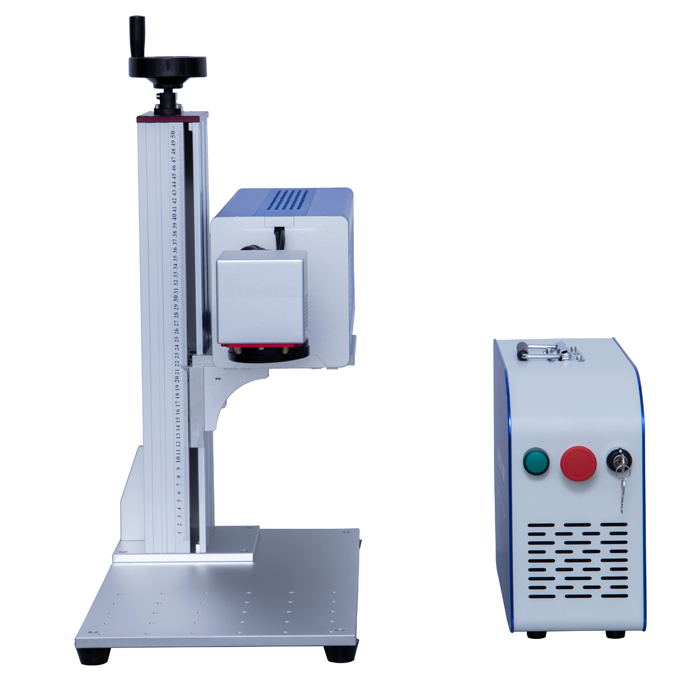
Beam delivery dictates your processing speed. A CO2 galvo laser relies on specialized optical manipulation. It steers the beam using a stationary head.
Mechanism: The system uses small, high-speed oscillating mirrors. These mirrors reflect the beam through a focusing f-theta lens onto the target. The mechanical mass moving is incredibly tiny.
Best for: This architecture suits high-volume production. It excels at processing stationary parts. You can seamlessly integrate it into continuous assembly lines for rapid serialization.
Trade-off: The major limitation involves the working envelope. The focal lens restricts the marking area. You typically remain confined to fields up to 300x300mm. Attempting larger areas introduces beam distortion at the outer edges.
Some applications demand massive workspaces. Gantry systems provide an entirely different approach to beam delivery. They classify as a highly versatile nonmetal marking machine for expansive jobs.
Mechanism: The machine physically moves the laser head. It travels across robust X and Y axes using belts and stepper motors. The optic "flies" over the stationary material bed.
Best for: We utilize gantries for large-format materials. They easily handle full acrylic sheets, large textile rolls, or oversized wooden panels.
Trade-off: Physical mass limits acceleration. Moving heavy carriage assemblies results in slower cycle times. A gantry cannot match the split-second repositioning speeds of oscillating mirrors.
The heart of your system dictates its lifespan and beam quality. You face a distinct choice between two primary resonator designs. Evaluating any robust industrial CO2 marker requires understanding this difference.
Glass DC Tubes represent the entry-level tier. They utilize high-voltage direct current to excite the gas mixture. They carry a significantly lower initial cost. However, they demand active water cooling to prevent thermal failure. You can expect a shorter operational lifespan, usually ranging from 2,000 to 5,000 hours. Their physical footprint is quite large. We consider them best for prototyping or low-volume batch runs.
RF Metal Tubes operate on radio frequency excitation. They command a higher initial purchase price. Most lower-wattage RF tubes function perfectly with simple air cooling. They deliver rapid pulsing capabilities, which translates directly to finer detail and sharper edges. Their lifespan often exceeds 20,000 hours. We consider them absolutely essential for rigorous 24/7 industrial environments.
Specification | Glass DC Tube | RF Metal Tube |
|---|---|---|
Excitation Method | High-voltage Direct Current | Radio Frequency |
Cooling Requirement | Active Water Chiller | Air Cooled (typically <60W) |
Average Lifespan | 2,000 - 5,000 Hours | 20,000+ Hours |
Beam Profile | Standard | Highly Refined (Crisp) |
Ideal Environment | Prototyping / Hobby | 24/7 Industrial Production |
Selecting the correct power level prevents material burning and bottlenecking. More wattage does not automatically mean better results.
30W-60W Systems: These lower power ranges offer exceptional control. They are ideal for delicate surface marking. We use them extensively for paper etching, thin leather goods, and electronic component coding. They minimize excessive charring.
100W+ Systems: High power delivers speed and depth. You require these wattages for deep engraving into dense wood or thick acrylic. They also empower high-speed "on-the-fly" conveyor tracking. The laser must deposit enough energy instantly as the part moves past the lens.
Hardware is useless without intelligent command structures. Your software environment dictates operational efficiency.
Industrial lines demand native integration. You need hardware capable of shaking hands with existing ERP and MES systems. This allows for dynamic serialization. The database feeds unique codes directly to the laser controller without human data entry. It eliminates transposition errors completely.
Furthermore, standardizing on reliable control software matters. Interfaces like EZCAD dominate the galvo market due to robust industrial features. LightBurn serves as an exceptional, user-friendly choice for gantry systems. Ensure your chosen hardware pairs natively with these widely accepted industry standards.
Vaporizing substrates generates hazardous byproducts. You cannot ignore airborne contaminants on the production floor. Vaporizing non-metals produces distinct toxic fumes. Processing materials like PVC or treated leather releases volatile organic compounds (VOCs) and dangerous particulates. PVC specifically releases corrosive hydrogen chloride gas. This gas destroys machinery and harms lungs.
You face a mandatory requirement for industrial-grade fume extractors. Do not vent hazardous smoke casually. Install multi-stage filtration units. These must include HEPA filters for micro-particulates. They must also feature deep activated carbon beds to neutralize harmful VOCs. Proper extraction ensures worker safety and keeps delicate optical lenses clean.
Excess heat destroys laser resonators rapidly. Proper thermal management guarantees beam stability and prevents premature tube death.
Your chiller requirements depend entirely on ambient factory temperatures and tube wattage. A simple passive radiator, like the CW-3000, only circulates room-temperature water. It offers no active refrigeration. It works well for very low-power tubes in cool climates. Conversely, a CW-5200 includes an active freon compressor. It maintains exact coolant temperatures regardless of summer heatwaves. High-wattage systems demand active refrigeration to maintain stable beam modes.
Regulatory adherence protects operators from catastrophic eye injuries. Laser light at 10.6 µm causes severe corneal damage instantly.
Evaluate your safety enclosure needs carefully. A Class 1 enclosure completely contains the beam. Operators can safely work nearby without specialized eyewear. It features interlocked doors that kill the beam instantly upon opening. A Class 4 setup exposes the beam path. This requires stringent administrative controls and mandatory safety goggles. Additionally, any protective viewing windows must carry the correct Optical Density (OD) rating. Ensure windows specify OD6+ protection specifically for the 10,600 nm wavelength.
Determining your physical workstation layout finalizes your deployment strategy. Buying an off-the-shelf cabinet works perfectly for standard batch processing. The geometry remains simple. You open the door, place the part, and press start.
However, specialized workflows require tailored mechanics. You might need custom rotary attachments for cylindrical objects. High-volume runs may demand automated bowl feeders or robotic pick-and-place units. In these scenarios, commissioning a specialized OEM CO2 laser solution proves advantageous. Partnering with an OEM integrator ensures the laser logic communicates flawlessly with customized material handling equipment.
Downtime destroys production schedules. Your vendor relationship determines how quickly you recover from hardware failures.
Evaluate vendor response times before purchasing. Ask about their local spare parts inventory. Sourcing replacement RF tubes or specific f-theta galvo lenses internationally takes weeks. A reliable vendor stocks these critical components regionally. Scrutinize the warranty terms carefully. Ensure coverage explicitly includes the laser source, the controller board, and the power supply units.
Never rely on generic marketing videos. Theoretical compatibility differs vastly from real-world results.
You must request application testing. Demand sample marking on your exact material batches before issuing a purchase order. Plastics and organic materials vary wildly between suppliers. A laser parameter that marks flawlessly on one acrylic brand might burn another. Send your physical samples to the vendor. Evaluate the returned pieces for edge quality, cycle speed, and barcode readability. This physical proof minimizes implementation risks drastically.
Summary: Successful deployment requires aligning your specific material properties with the correct tube architecture and beam delivery mechanics.
Match RF tubes with high-speed galvo heads for rapid, high-volume production on small items.
Select robust gantry systems equipped with appropriate cooling for large-format sheet material processing.
Final Recommendation: Prioritize integration partners who enforce mandatory material testing and engineer comprehensive fume extraction solutions from day one.
Call to Action: Secure your production quality today. Request a physical material sample test or consult directly with an integration engineer to define your precise wattage and wavelength requirements.
A: Directly, no. CO2 lasers operate at a wavelength that reflects off bare metals. You must use a specialized metal marking spray (like CerMark) which the laser bonds to the surface, or opt for a fiber laser.
A: 10.6 µm is the standard wavelength suitable for most non-metals. 9.3 µm is a specialized wavelength highly absorbed by specific plastics like PET, allowing for clean, melt-free marks.
A: Industrial RF metal tubes typically last 20,000 to 30,000 hours and can often be refurbished. Glass DC tubes generally last 2,000 to 5,000 hours and require complete replacement.
A: Glass tubes always require active water cooling (chillers). Many lower-wattage (under 60W) RF metal tubes are air-cooled, reducing footprint and maintenance, but higher-wattage RF tubes still require water cooling.