Views: 0 Author: Site Editor Publish Time: 2026-05-16 Origin: Site
High scrap rates severely plague modern precision plastic manufacturing. Traditional thermal lasers frequently cause catastrophic melting, unsightly foaming, or microscopic cracking. These surface defects ruin expensive components. They also disrupt tight production schedules. Enter the 355nm laser. This specific wavelength stands as the definitive industry standard for permanent, non-destructive identification. It effortlessly delivers high-contrast marks on highly sensitive substrates without introducing destructive heat.
This article equips production engineers and facility procurement managers with a solid technical framework. You will learn exactly how to evaluate this technology against older alternatives. We will thoroughly explore the underlying physics of non-thermal material interactions. You will also discover practical applications where microscopic precision is absolutely non-negotiable. By deeply understanding the internal mechanics, you can confidently justify the initial capital required for this advanced marking solution.
Zero Heat Damage: 355nm lasers utilize photochemical ablation (cold laser marking) to break molecular bonds without generating a Heat-Affected Zone (HAZ).
Material Versatility: Outperforms CO2 and Fiber on highly sensitive, transparent, or heat-reactive plastics (ABS, PC, PET, PE) without requiring expensive chemical additives.
Regulatory Compliance: Ideal for medical and aerospace applications requiring tactile-free, sterilization-resistant markings (e.g., FDA UDI standards).
Total Cost of Ownership (TCO): While upfront costs and crystal degradation require higher initial investment, the elimination of consumable inks and reduction in part rejection drives long-term ROI.
Standard lasers rely heavily on photothermal energy. They heat the target surface until it melts, bubbles, or burns. This brute-force mechanism works exceptionally well for tough industrial metals. However, it spells disaster for delicate polymers and thin films. The ultraviolet spectrum operates fundamentally differently. It utilizes a sophisticated physics process known as third-harmonic generation. Inside the machine cavity, non-linear crystals convert a standard 1064nm Nd:YAG beam down to 532nm. Then, they reduce it further down to 355nm. This specific conversion yields a highly concentrated, ultra-fine focal spot.
Instead of burning the plastic substrate, these high-energy ultraviolet photons perform photochemical processing. They carry enough quantum energy to directly break the chemical bonds holding the polymer chains together. Industry professionals widely call this reaction cold laser marking. Because the light severs molecular bonds instantly, it avoids generating a harmful Heat-Affected Zone (HAZ). The surrounding material remains entirely unaffected.
This cold processing dynamic perfectly preserves the substrate's structural integrity. The underlying chemical composition remains fully intact. You easily avoid unwanted warping in thin plastic sheets. You also prevent microscopic stress-fractures in rigid polymers like polycarbonate or high-density polyethylene. When structural precision matters most, eliminating thermal degradation ensures every single manufactured part safely passes strict quality control checks.
Production engineers must match the correct laser source to their specific plastic material. A misguided choice guarantees high rejection rates and wasted materials. Let us systematically evaluate the three major technologies used in modern manufacturing facilities. We must look past simple machine capabilities. Instead, we focus closely on yield rates, material reactions, and precision tolerances.
Laser Technology | Wavelength | Primary Mechanism | Damage Risk on Plastics | Best Application |
|---|---|---|---|---|
CO2 | 10,600nm | Photothermal (Intense Heating) | High (Melting, Swelling) | Basic transparent targets (POM), Wood |
Fiber | 1064nm | Photothermal (Absorption) | Moderate (Passes through clear materials) | Metals, Plastics with custom additives |
UV | 355nm | Photochemical (Cold Process) | Zero to Very Low | Sensitive, transparent, or white resins |
CO2 (10,600nm): This legacy technology emits mid-infrared light. It relies entirely on intense, brute-force heat. CO2 equipment carries a significant risk of swelling or burning sensitive synthetic resins. The resulting marking resolution remains relatively low due to a naturally larger beam spot. It works acceptably for basic transparent targets. However, it fails completely on advanced medical-grade polymers.
Fiber (1064nm): This common technology emits near-infrared light. It depends on direct heat absorption by the target material. A fiber beam often passes straight through transparent or white plastics without leaving any visible mark. To achieve visible contrast, manufacturers must inject custom chemical additives into the plastic during molding. This drastically adds unnecessary production steps and increases material complexity.
UV (355nm): The ultraviolet spectrum offers an extremely high absorption rate across almost all plastics. It easily delivers dark or white high-contrast marks. The photochemical process causes absolutely no physical degradation to the material surface. You do not need expensive contrast-enhancing additives.
Decision Filter: You must frame your final choice around precision tolerances. Always prioritize high yield rates and uncompromised part integrity rather than simply seeking the cheapest machine available.
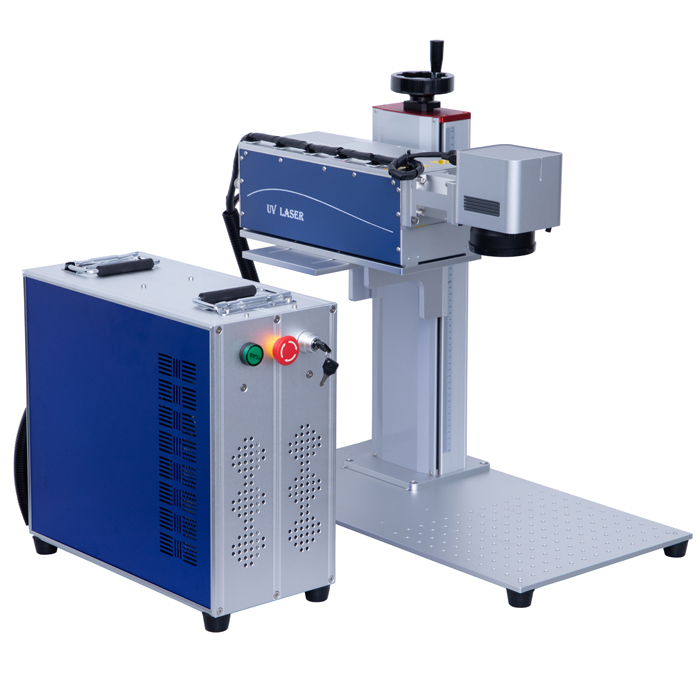
Certain critical industries tolerate zero errors. In these high-stakes production environments, non-destructive marking is strictly mandatory. Traditional thermal techniques routinely fail these strict quality standards. Advanced UV laser marking provides robust solutions where lesser methods fall short.
Medical manufacturers must rigorously preserve sterile packaging barriers. Regulatory bodies strictly enforce traceability protocols. Ultraviolet technology creates permanent Unique Device Identification (UDI) traceability codes directly on medical plastics. These dark marks sit cleanly on the material surface. They do not compromise the protective vacuum seal. They also create zero tactile depth where harmful bacteria could potentially hide. These crisp, hygienic marks easily survive 1000+ aggressive chemical sterilization cycles without fading.
Modern electronic casings utilize highly specialized, chemically pure resins. Standard thermal lasers inevitably melt these sensitive casings. Melting severely alters their delicate electrical properties. Cold marking brilliantly prevents any such micro-alterations. It leaves printed circuit boards (PCBs) and microscopic silicone microchips completely safe. Manufacturers achieve high-contrast serialized codes without risking catastrophic electrical short circuits.
Commercial flight components face brutal environmental conditions daily. They undergo rapid, extreme temperature fluctuations. Cabin crews subject them to aggressive chemical cleaning protocols frequently. Standard marking methods often weaken the underlying plastic structure. A properly calibrated plastic laser engraving process creates incredibly stress-resistant marks. The host material fully retains its original tensile strength. This uncompromised integrity ensures long-term passenger safety and seamless aerospace regulatory compliance.
Selecting the correct wattage directly impacts your daily throughput capabilities. More power is rarely better for delicate plastics. You must align your machine specifications directly with your actual production goals. A direct 3W 5W UV laser comparison helps clarify this critical equipment choice.
Here is a practical framework to guide your precise wattage selection:
3W UV Lasers: This equipment serves as the primary baseline standard. It excels at processing thin films, medical tubing, and standard high-contrast marking. Choose this wattage if your production environment allows flexible cycle times. It remains the ideal choice when microscopic precision stands as your absolute highest priority.
5W UV Lasers: Consider this configuration a deliberate upgrade for demanding production lines. It delivers notably faster cycle times. It also performs deeper micro-engraving on much harder polymers, such as dense ABS. Choose a 5W system for high-speed automated line integration where speed matters equally alongside precision.
Scalability Consideration: You might incorrectly assume higher power automatically yields better results. This logic is fundamentally flawed for plastics. Exceeding 5W often re-introduces dangerous thermal risks. Excessive wattage causes unwanted micro-foaming on sensitive edges. Precision optical tuning matters significantly more than raw power output. Over-powering the focused beam will simply burn your substrate and ruin your yield rates. Facility managers must prioritize beam quality over sheer intensity.
Adopting advanced technology requires highly transparent expectations. Facility operators must thoroughly understand capital requirements, component lifespans, and operational protocols before placing an order.
Maintain absolute transparency during your procurement phase. Industrial-grade ultraviolet equipment requires a solid initial capital investment. Entry-level systems typically start around $5,000. For fully automated, continuous industrial integration, these equipment costs can scale well past $12,000. You must budget accurately for these initial hardware acquisitions.
You must set realistic expectations regarding the primary light source. Fiber laser modules often boast an impressive 100,000-hour lifespan. Ultraviolet systems differ greatly due to their complex internal architecture. The vital non-linear crystals naturally degrade over time. Expect a standard operational lifespan between 10,000 and 15,000 hours. Afterward, the primary module will definitely require professional maintenance, refurbishment, or complete replacement to maintain beam quality.
Proper facility controls ensure consistent output quality. Implement these critical environmental and operational standards immediately upon installation:
Surface Preparation: Ensure all incoming parts undergo thorough chemical degreasing. Implement strict static removal protocols before any parts reach the marking zone. Dust acts as a severe barrier to ultraviolet light.
Quality Monitoring: Install high-speed automated vision systems. They will verify code readability instantly on the production line, catching any focusing errors immediately.
Fume Extraction: Even minimal photochemical ablation generates microscopic airborne particulates. You must install dedicated fume exhaust systems. Microscopic polymer dust can quickly coat the sensitive F-theta lens. Proper extraction protects operators and keeps internal optics perfectly clean.
Finalizing your equipment upgrade requires clear, actionable next steps. Avoid rushing the procurement process.
Test specific substrates: Never rely solely on generic marketing spec sheets. Always request physical sample testing on your exact plastic materials before purchasing equipment.
Prioritize strict compliance: If your specific industry requires FDA or aerospace approvals, adopt ultraviolet technology immediately. It guarantees structural integrity remains pristine.
Plan maintenance schedules: Build the 10,000-hour crystal module replacement protocol directly into your long-term facility maintenance calendars.
Match equipment wattage carefully: Choose a 3-watt module for ultimate precision on thin films. Select a 5-watt module for significantly faster cycle times on dense polymers.
In the end, accidental thermal damage leads directly to unacceptable regulatory failures. By strategically leveraging precise photochemical processes, you effectively secure reliable, high-contrast identification for your most sensitive manufacturing projects.
A: Yes. The high-energy photons interact directly with the polymer surface at a molecular level. This unique reaction completely eliminates the need for expensive contrast chemical additives. Near-infrared lasers usually require these additives to create any visible mark on clear materials.
A: No. The complex internal non-linear crystals naturally degrade over time. The primary laser module requires professional refurbishment or complete replacement after 10,000 to 15,000 hours of active use. Additionally, external lenses demand strict routine cleaning to maintain pinpoint optical accuracy.
A: Marking safely induces a surface-level color change without creating any tactile depth. Engraving physically removes a microscopic layer of material, creating a shallow groove. Ultraviolet technology performs both tasks efficiently. However, it truly excels at tactile-free, completely damage-free marking on highly sensitive substrates.