Views: 0 Author: Site Editor Publish Time: 2026-01-23 Origin: Site
Can LASER WELDING MACHINES replace MIG welding? While both methods are widely used, laser welding is often seen as a faster, more precise alternative. But can it truly replace MIG welding in all scenarios?
In this article, we’ll explore the strengths and limitations of LASER WELDING MACHINES compared to MIG welding. You’ll learn when laser welding can take the lead and when MIG welding remains the better option for your projects.
One of the key benefits of LASER WELDING MACHINES is their speed. Laser welding is particularly efficient in high-volume production environments, where fast and precise welding is needed. LASER WELDING MACHINES can perform repetitive tasks with minimal operator input, making them ideal for applications like automotive manufacturing, where high production rates are essential. In comparison, MIG welding often requires more setup time and operator intervention.
Laser welding’s high efficiency is largely due to its ability to focus a concentrated beam of light, creating deep welds quickly. This makes laser welding particularly suited for repetitive tasks that require consistent quality. Additionally, the precision of the laser reduces the need for post-weld processing, such as grinding or polishing, as it leaves behind a clean, narrow weld with minimal spatter.
In high-production settings, where reducing downtime and improving throughput is crucial, laser welding can significantly increase production rates. The ability to perform continuous, automated welding with minimal interruptions gives LASER WELDING MACHINES a clear advantage over MIG in terms of speed.
When it comes to precision, LASER WELDING MACHINES stand out. The focused nature of the laser beam allows for narrow, deep welds with minimal heat-affected zones (HAZ), making it ideal for applications requiring extreme accuracy. This precision reduces the need for post-weld cleanup, such as grinding or polishing, which is often necessary after MIG welding due to spatter and excess material.
For industries like electronics, aerospace, and medical device manufacturing, where quality and accuracy are paramount, LASER WELDING MACHINES are preferred because of their ability to produce superior welds with minimal distortion. The laser welding process is highly controlled, providing consistent results with less risk of defects such as porosity, cracks, or undercutting.
Laser welding’s minimal heat input also reduces the chance of warping or distortion in the surrounding areas of the material, ensuring that the final product remains within tight tolerances. This makes laser welding a valuable method for industries where weld quality is critical and any imperfections could result in costly recalls or failures.
Laser welding is particularly effective for thin materials, where MIG welding can lead to burn-through or excessive heat distortion. The high energy concentration of the laser allows for fast and precise welds without damaging the thin workpiece. This makes LASER WELDING MACHINES the go-to option for welding delicate components or thin sheet metals, where MIG welding might struggle to achieve the desired quality.
In industries such as electronics or automotive manufacturing, where thin and lightweight materials are commonly used, laser welding provides the perfect solution. For example, when welding car body panels or thin electronic components, laser welding ensures a clean, strong joint without compromising the integrity of the material. MIG welding, in contrast, would risk creating burn-through or excessive distortion due to the higher heat input.
Laser welding also excels in applications where the material being welded is prone to oxidation, as it minimizes the exposure to heat and the atmosphere, reducing the likelihood of creating a poor-quality weld.
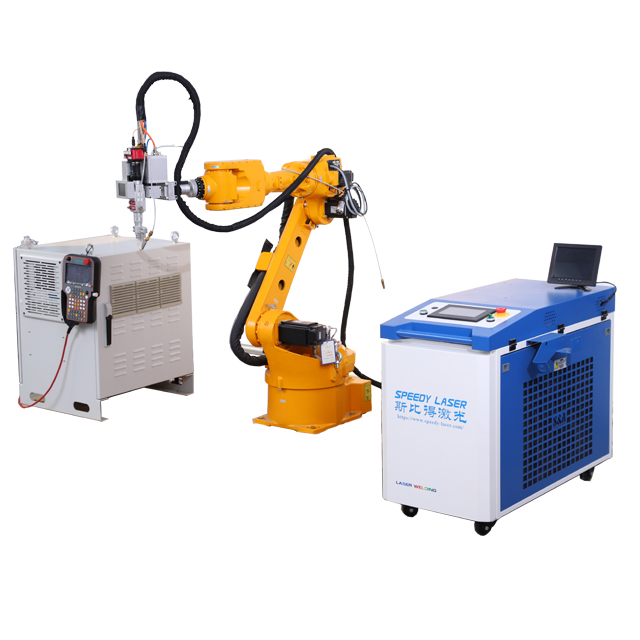
Another area where LASER WELDING MACHINES excel is automation. Laser welding systems are easily integrated into robotic systems, offering a level of precision and consistency that is difficult to achieve with MIG welding. The automation of laser welding reduces human error and allows for continuous production without the need for frequent adjustments, making it highly suitable for large-scale manufacturing.
Automation also improves consistency in weld quality, ensuring uniform results across multiple units. This is particularly important in industries where high-volume production with consistent quality is a priority. Automated laser welding systems can be set up to weld multiple parts simultaneously, speeding up production while maintaining quality and precision.
Furthermore, the automation capabilities of laser welding help to reduce labor costs and increase safety. Operators can monitor and adjust the system remotely, reducing their exposure to dangerous fumes and heat. This makes laser welding an attractive option for industries looking to optimize production while maintaining a safe and efficient work environment.
MIG welding is often preferred in applications where there are wide gaps or poor fit-ups between materials. MIG welding can fill larger gaps with filler material, whereas laser welding struggles with parts that do not fit tightly together. This makes MIG welding more suitable for general fabrication tasks, where the precision of the fit is less critical.
In industries like construction or heavy machinery manufacturing, where fit-up issues are common, MIG welding is still the preferred method due to its ability to handle less-than-ideal conditions. The ability to bridge gaps with filler material allows MIG welding to adapt to a wide range of material irregularities that laser welding might not handle as effectively.
MIG welding is a more cost-effective solution for general fabrication tasks, particularly for smaller operations or when working with thicker materials. The initial investment in a MIG welding machine is lower compared to LASER WELDING MACHINES, making it more accessible for smaller shops or businesses that need a reliable, versatile welding option at a lower upfront cost.
Moreover, MIG welding machines are simpler to operate and maintain, making them ideal for general use across a variety of welding tasks. The training requirements for MIG welding are typically less demanding, making it a more accessible option for smaller teams or shops without specialized technical expertise.
While LASER WELDING MACHINES offer higher precision, their higher initial cost and specialized operation may not always justify the investment for businesses that need a general-purpose welding solution. MIG welding remains a viable and cost-effective option for many applications.
MIG welding is highly versatile and can be adapted to different welding positions, such as overhead, vertical, or horizontal. It is also well-suited for welding a wide range of materials and thicknesses, including thick metals that may be challenging for LASER WELDING MACHINES.
For projects involving larger, bulkier joints, MIG welding’s flexibility and adaptability make it the go-to option, as it can handle a wide range of welding positions and material types. The ability to weld in multiple positions without compromising the quality of the weld gives MIG welding an advantage in many industrial applications.
Tip: If your project requires welding in difficult positions or involves thicker materials, MIG welding might be the better choice due to its flexibility.
One of the significant advantages of LASER WELDING MACHINES is their ability to produce stronger, purer welds. Laser welding can fuse the parent material directly, often without the need for filler material. This results in a cleaner weld with minimal porosity and no need for post-weld finishing. Laser welding’s low heat input also ensures that the weld remains free of defects like distortion and cracks.
For industries where strength and durability are critical, laser welding is the preferred method for its superior weld quality. Laser welds are typically stronger and have better mechanical properties compared to MIG welds, especially when welding thin materials.
While LASER WELDING MACHINES excel in precision and speed, MIG welding is often more effective for welding thicker materials. MIG welding can generate a deeper heat pool, making it suitable for heavy-duty applications where thickness and strength are essential. This makes MIG welding a preferred choice for larger industrial projects, such as shipbuilding, construction, and structural welding.
Tip: For projects involving thick materials, MIG welding is typically more effective, as it provides better penetration and stronger joints.
The initial investment in LASER WELDING MACHINES is typically higher than MIG welding equipment. However, laser welding’s higher precision, speed, and automation capabilities make it a worthwhile investment for high-precision and high-volume applications. Over time, the reduction in labor costs and faster production speeds can offset the higher initial cost.
MIG welding, on the other hand, is more affordable upfront and is still widely used for many general applications due to its lower cost.
While LASER WELDING MACHINES require less frequent maintenance, they can incur higher costs for consumables like lenses, focusing optics, and laser diodes. MIG welding machines, however, require more frequent replacement of parts like welding tips, nozzles, and gas consumables.
Laser welding’s longer intervals between maintenance and fewer consumables make it a more cost-effective solution in the long run for high-volume applications.
Welding Method | Initial Cost | Operational Cost | Maintenance Needs | Suitability |
Laser Welding | Higher | Moderate | Low (few consumables) | High-precision, thin materials |
MIG Welding | Lower | Higher | High (frequent parts replacement) | General fabrication, thicker materials |
LASER WELDING MACHINES are ideal for industries requiring precision and speed, such as automotive, aerospace, and electronics. Laser welding excels in applications that require high-quality, clean welds with minimal distortion. The automation of laser welding also makes it suitable for high-volume production, where consistency is key.
MIG welding remains the preferred choice for general fabrication, especially in industries that deal with thicker materials or less precise work. It’s highly adaptable and can handle a wide range of welding positions and material types. For companies looking for a cost-effective and versatile welding method, MIG welding is still an essential tool.
In conclusion, LASER WELDING MACHINES offer precision and speed, making them ideal for high-accuracy applications. However, MIG welding remains the superior choice for thicker materials and general fabrication tasks due to its versatility and lower initial cost. Both welding methods serve complementary roles in the industry, with laser welding excelling in precision and MIG welding offering flexibility and cost-effectiveness.
Nanjing Speedy Laser Technology Co., Ltd. provides high-quality LASER WELDING MACHINES designed for various industrial applications. Their products deliver exceptional performance, providing businesses with the precision and efficiency needed to improve production processes and achieve superior welds.
A: LASER WELDING MACHINES can replace MIG welding in certain applications, especially where high precision and speed are required. However, MIG welding remains superior for thicker materials and general fabrication tasks.
A: LASER WELDING MACHINES offer superior precision, minimal heat-affected zones, and faster processing times. They are ideal for thin materials and high-precision applications, whereas MIG welding is better for thicker materials.
A: Yes, MIG welding is generally more cost-effective, especially for general fabrication. LASER WELDING MACHINES have higher upfront costs but provide greater long-term value in high-volume, high-precision applications.
A: LASER WELDING MACHINES typically last longer than MIG welders due to their advanced technology and fewer moving parts. Proper maintenance can extend the lifespan of both types of equipment significantly.
A: LASER WELDING MACHINES are versatile and can weld a variety of materials, including steel, aluminum, titanium, and other metals. They are especially effective for materials that require precise, clean welds.