Views: 0 Author: Site Editor Publish Time: 2026-05-18 Origin: Site
Traditional surface preparation constantly drives up operational expenses for modern manufacturers. Sandblasting requires extensive media cleanup and regularly halts nearby production lines to prevent abrasive contamination. Chemical stripping introduces hazardous waste disposal nightmares. You must also enforce strict personal protective equipment (PPE) compliance to keep your workers safe. Industrial facilities desperately need a cleaner, more efficient way to prepare surfaces.
Enter pulsed laser cleaning. This highly selective, consumable-free alternative changes the manufacturing landscape completely. It shifts rust removal from a manual, messy, and dangerous process into a precise, technology-driven operation. You no longer need to buy endless bags of abrasive media or barrels of toxic solvents. You simply need electricity and a precisely focused beam of light.
In this comprehensive guide, we explore the core physical mechanics behind these advanced laser systems. We compare them directly against traditional methods and continuous-wave (CW) laser alternatives. Finally, we provide a practical, actionable framework. You will learn exactly how to evaluate machine specifications and ensure a successful integration into your facility.
Precision over Force: Pulsed laser cleaning utilizes high-peak-power, short-duration bursts to vaporize rust without altering the underlying metal substrate.
Pulsed vs. Continuous (CW): Pulsed lasers are essential for delicate, low-heat applications (molds, thin metals, restorations), whereas CW lasers are suited for rapid, heavy-duty scale removal where heat input is acceptable.
Safety & Infrastructure: Laser cleaning requires proper fume extraction systems and adherence to optical safety standards, replacing chemical hazards with manageable optical protocols.
Understanding how a laser cleaning machine works requires looking closely at material science. Every single material has a specific ablation threshold. This threshold defines the exact energy point where a solid substance rapidly vaporizes into a gas. Rust, paint, and industrial oils share a highly beneficial physical trait. They possess significantly lower ablation thresholds than common base metals like steel or aluminum.
This distinct difference in vaporization points creates a massive operational advantage. You can calibrate the laser to deliver just enough energy to destroy the surface rust. Because the base metal requires much more energy to melt, it remains completely safe. The bare metal simply reflects the remaining laser light away. Industry experts refer to this protective phenomenon as selective vaporization.
Pulsed lasers provide exceptional thermal control during this process. They do not emit a steady, continuous beam. Instead, they deliver energy in rapid, nanosecond bursts. These ultra-short flashes achieve massive peak power. They shatter the rust layer instantly. Because the pulse duration remains so incredibly short, heat never gets the chance to accumulate in the base metal. You experience zero warping. You see no ugly heat discoloration on the part. Think of it as using a microscopic scalpel instead of a massive sledgehammer. You apply force only to the exact contaminant, leaving the surrounding healthy material completely untouched.
The actual physical removal relies on three specific scientific actions working together simultaneously:
Thermal Ablation: The laser instantly heats the contaminant past its vaporization point. It turns solid iron oxide (rust) directly into a harmless gas.
Thermal Stress: The rapid, intense energy delivery causes the rust layer to expand violently. This creates immense mechanical pressure, forcing the rust to crack and peel away from the cooler metal beneath it.
Plasma Shockwaves: The extreme peak power ionizes the surrounding air right at the surface. It creates localized plasma micro-explosions. These tiny shockwaves physically blast away sub-micron particles that resist vaporization.
By relying on these predictable physics, operators can clean delicate injection molds, valuable historical artifacts, and thin aerospace components without altering critical dimensional tolerances.
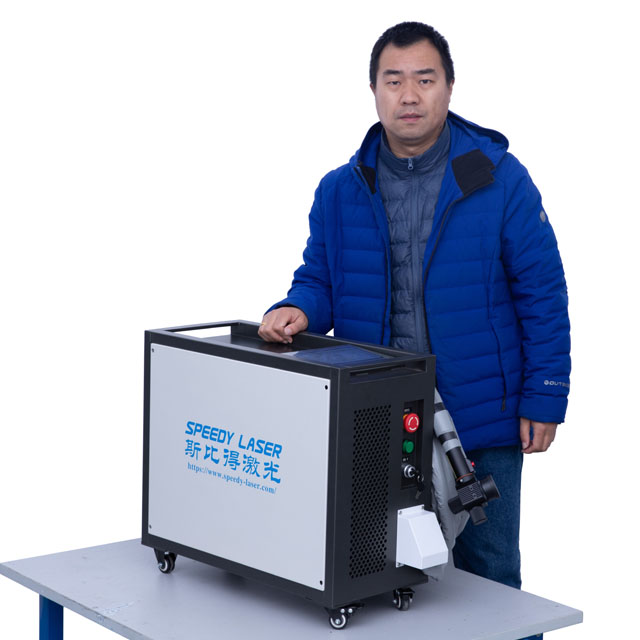
Industrial facilities often rely heavily on legacy methods for surface preparation. Unfortunately, these outdated techniques bring major operational bottlenecks. They slow down production and introduce hidden costs. Let us compare these traditional methods directly to modern laser rust removal.
Abrasive blasting relies entirely on brute kinetic force. You shoot hard particles at high speeds to smash away the rust.
Limitations: The abrasives destroy the rust, but they also damage the bare metal. They cause micro-pitting across the substrate, which alters precise dimensions. Blasting generates massive amounts of airborne particulate hazards. Workers breathe this dangerous dust. You must build expensive containment tents. You spend hours sweeping up and hauling away contaminated heavy sand.
The Laser Advantage: Lasers remain entirely non-kinetic. They cause zero secondary waste. You can perform laser cleaning in-situ, right on the factory floor. You do not need to move nearby operational machinery because there is no dust to ruin their bearings.
Chemical dipping and solvent wiping represent another common approach. You soak the rusted parts in highly acidic baths.
Limitations: Chemicals require massive recurring costs for regular purchasing. They demand incredibly strict, hazardous waste disposal protocols. Reaction times remain painfully slow, sometimes taking hours or days. You must comply with rigid environmental and worker safety standards. Your operators need extensive, uncomfortable PPE just to handle the materials safely.
The Laser Advantage: Lasers offer true consumable-free operation. They require only standard industrial electricity to run. The process remains highly environmentally friendly. You only need to attach a proper fume extraction system. This industrial vacuum safely captures the tiny amount of vaporized particles produced during the cleaning process.
Choosing the right core technology dictates your operational success. Manufacturers offer two primary types of laser systems. You must understand their fundamental differences to avoid catastrophic processing errors.
A Continuous Wave laser operates exactly as its name suggests. It delivers a constant, unbroken beam of energy into the material.
Mechanism: The laser fires without any interruption. It pumps a steady stream of intense heat directly into the target surface.
Best Fit: We strongly recommend CW lasers for incredibly thick rust, heavy marine scale, and massive structural steel beams. In these heavy-duty scenarios, processing speed serves as your primary performance metric. Slight surface heating or minor discoloration remains perfectly acceptable.
Drawback: You face a high risk of warping thin metals. You can easily damage delicate components because the constant beam causes rapid heat saturation in the substrate.
Pulsed systems operate very differently. They utilize high-frequency, intermittent energy flashes.
Mechanism: They turn on and off thousands of times per second. This flashing mechanism allows the underlying metal to cool down rapidly between each individual pulse.
Best Fit: They excel at cleaning precision injection molds, fragile aerospace components, and irreplaceable historical restorations. They are also perfect for welding pre-treatment and post-treatment, where preserving the metal's temper is critical.
Drawback: They generally operate slower on extremely thick, heavy rust layers compared to high-power CW units. They also carry a noticeably higher capital cost per watt of power.
Use the decision matrix below to base your choice on substrate heat sensitivity, contaminant thickness, and your required surface finish.
Application Factor | Pulsed Laser Technology | Continuous Wave (CW) Laser |
|---|---|---|
Substrate Heat Sensitivity | High capability (Prevents warping on thin parts) | Low capability (Best for thick, robust steel) |
Contaminant Thickness | Light to medium rust, delicate paint, oils | Extremely thick rust, heavy marine scale |
Post-Cleaning Finish | Pristine condition, zero thermal discoloration | Functional, but may leave a slight heat tint |
Power directly dictates performance and speed. When evaluating a 200W 500W laser cleaning setup, you must match the machine's wattage to your daily throughput requirements. Buying too little power creates bottlenecks. Buying too much power wastes valuable capital.
Lower power units offer distinct and highly valuable mobility advantages for dynamic work environments.
Profile: These compact systems are often air-cooled. This makes them highly portable. You can mount them in a wearable backpack or push them easily on a small cart.
Ideal Scenarios: Use them for highly localized rust removal. They excel at precise weld seam cleaning before inspection. They handle NDT (non-destructive testing) surface prep easily. They are absolutely perfect for mobile field repairs up on scaffolds or inside tight spaces.
Expectation: You get a slower coverage rate compared to heavy industrial units. However, you gain maximum agility. You also benefit from significantly lower electrical power consumption.
Higher power machines deliver the relentless industrial-grade throughput required by high-volume factories.
Profile: Manufacturers typically build these as robust, water-cooled units. They design them specifically to handle continuous, multi-shift industrial operations without overheating.
Ideal Scenarios: Deploy them for medium-to-heavy rust accumulation. They handle large surface area paint stripping highly effectively. You can easily integrate them into automated robotic cells for mass production lines.
Expectation: They balance high processing speed flawlessly. Because they still utilize pulsed technology, they maintain excellent substrate protection. They handle much tougher jobs without sacrificing precision.
Not all manufacturers build equipment to the same rigorous industrial standards. You need a strict evaluation process to protect your investment. Use this practical checklist to interrogate vendors before you finalize any purchase.
Optical & Cooling Specifications: Verify immediately if the machine uses air or water cooling. Base this requirement entirely on your shift duration. Air cooling works fine for intermittent use. Water cooling is absolutely mandatory for continuous, heavy-duty running. Ask for the focal length and beam width adjustability. These optical parameters must match your specific part geometry perfectly.
Integration & Reach: Confirm written specifications for the fiber optic cable length. Standard lengths often range from just 5 to 10 meters. If your application requires a 30-meter cable to reach high bridge beams, you face a major problem. Signal degradation occurs over long distances. The vendor must explicitly explain how they boost the source power to compensate for this light loss.
Safety & Compliance Red Flags: Do not ever accept verbal assurances regarding safety. Demand written, verifiable CE or ISO certifications. Evaluate if the vendor provides proper safety enclosure guidelines for your factory floor. Ask them for detailed RHZ (Reduced Hazard Zone) technology documentation to protect your bystanders.
Proof of Concept: A trustworthy vendor should eagerly offer a sample testing Service Level Agreement (SLA). They should ask you to ship your specific rusted or painted parts to their lab. They must run them and provide exact cycle times and video evidence before you buy. Never purchase an industrial laser based purely on theoretical speed estimates.
Pulsed laser rust removal is no longer an experimental or futuristic technology. It stands today as a mature, mathematically predictable alternative. It easily and consistently outperforms traditional media blasting and harsh chemical baths. The technology delivers unparalleled precision without generating massive secondary cleanup headaches.
However, the success of a laser cleaning deployment relies entirely on proper alignment. You must rigorously match the machine type—Pulse versus CW—to the specific materials you process. You must align the output wattage to the thermal limitations of the product being cleaned. Buying a continuous wave laser for delicate injection molds will end in melted disaster. Buying a low-power pulsed unit for massive, heavily rusted ship hulls will severely frustrate your operators with slow speeds.
Take direct action today to modernize your facility. Document your current surface preparation expenses carefully. Track your abrasive media purchases, your wasted labor hours sweeping sand, and your hazardous disposal fees. Reach out to a qualified application engineer. Ask for a customized operational assessment and a physical sample material test. Seeing your own heavily rusted parts restored safely to bare metal in seconds changes the entire manufacturing perspective.
A: No, it does not. Proper calibration of a pulsed laser ensures the energy completely stops at the specific ablation threshold of the base metal. The laser instantly vaporizes the rust layer. The cooler underlying metal simply reflects the remaining light, resulting in absolutely zero structural damage or dimensional changes.
A: Operators must strictly wear specialized laser safety glasses rated for the exact wavelength of the machine. You need a localized fume extraction system to vacuum up the vaporized rust safely. Depending on your facility classification, you may also need optical safety barriers to protect nearby workers from stray reflections.
A: Most industrial users see a full return on their initial investment between 8 and 18 months. This rapid financial payback occurs because you completely eliminate recurring chemical purchases. You drop hazardous waste disposal fees entirely. You also massively reduce the labor hours typically wasted on sweeping and secondary cleanup.
A: Yes, it absolutely can. Laser thermal ablation effectively vaporizes complex hydrocarbons just as easily as it removes iron oxides. The process leaves a perfectly clean, dry surface. You achieve a weld-ready or paint-ready finish immediately, completely eliminating the need for messy liquid solvents.